
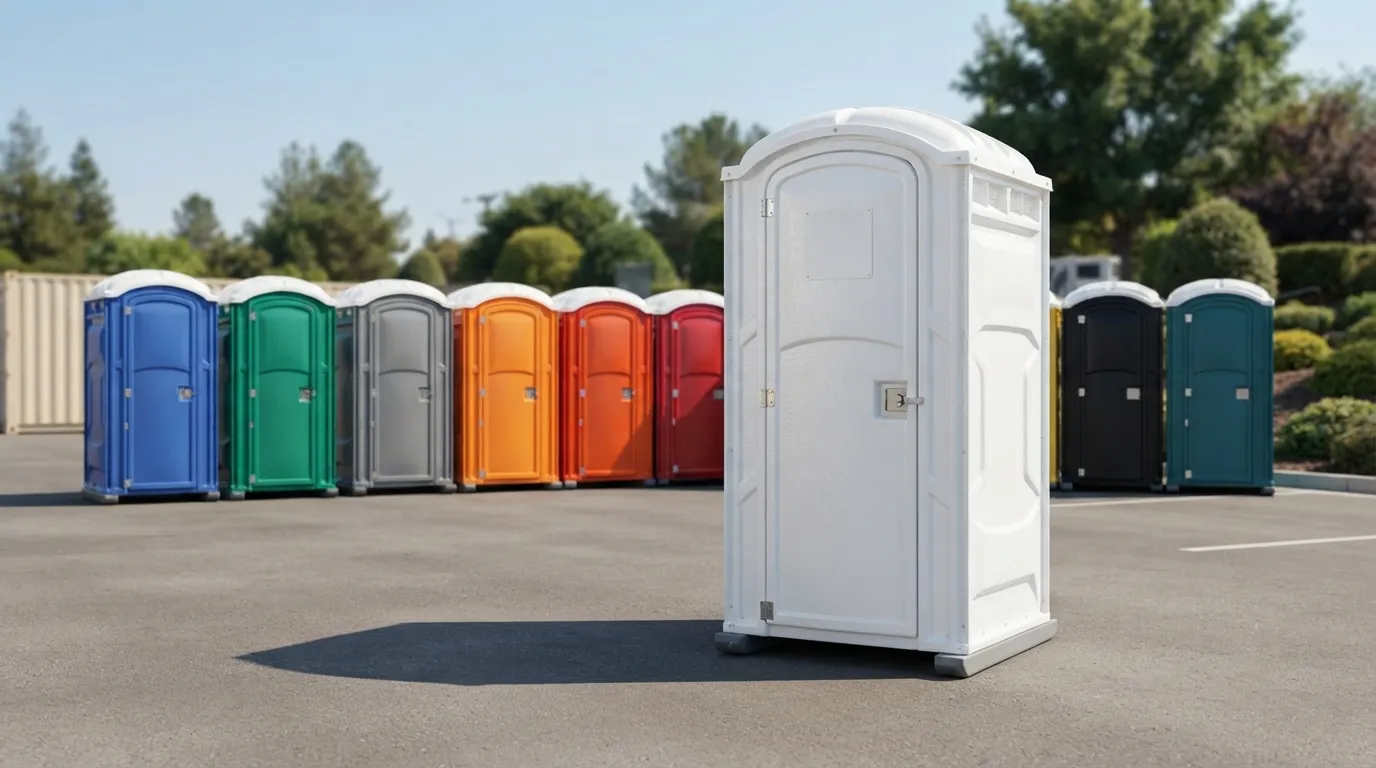
How Many Units Do You Actually Need?
Start with headcount, then check duration. A construction crew under 20 workers needs 1 toilet facility under OSHA 1926.51(c)(1), moving to a toilet and urinal per 40 workers as the crew grows to 200 or more. Event planners should think in hours per guest, not just total attendance, since a wedding reception concentrates use into a tighter window than an eight hour shift. If you're not sure where you land, our sizing guide walks through the math for both job sites and events. A standard portable toilet works for most crews, but if guests expect flush fixtures, look at a deluxe flushable unit instead. Weekly rates for a standard unit run higher than a single day but lower than a full month, so match your booking length to the actual job. For anything mixing genders and formalwear, a restroom trailer handles higher traffic better than stand-alone units. Water access matters too. OSHA 1926.51(a)(1) requires an adequate supply of potable water at any place of employment, which is separate from toilet counts but often gets missed on the checklist.
Where Should the Unit Go?
Placement decides whether service day goes smoothly or turns into a mess. A roll-off dumpster delivery needs about 60 feet of straight clearance behind the truck, and portable toilets need firm, level ground close to that same access path. Keep units off soft dirt or slopes near Saint George's washes, since a tipped unit is the most common service call we get. If anyone using the unit has a mobility need, ADA Standards section 213.2 requires at least 5 percent of clustered single-user units to be accessible, and never fewer than one. That accessible unit needs a 60 inch turning circle per ADA Standards section 304.3.1, plus a route at least 36 inches wide under ADA Standards section 403.5.1. Check our placement guide before delivery day, especially if the site sits near a curb or right of way, since placement in a public right of way needs confirming with the City of Saint George directly. We haven't verified any specific right-of-way rule, so call ahead rather than assume. Lighting matters after dark too, and OSHA 1926.56(a) sets minimum illumination for active construction areas.
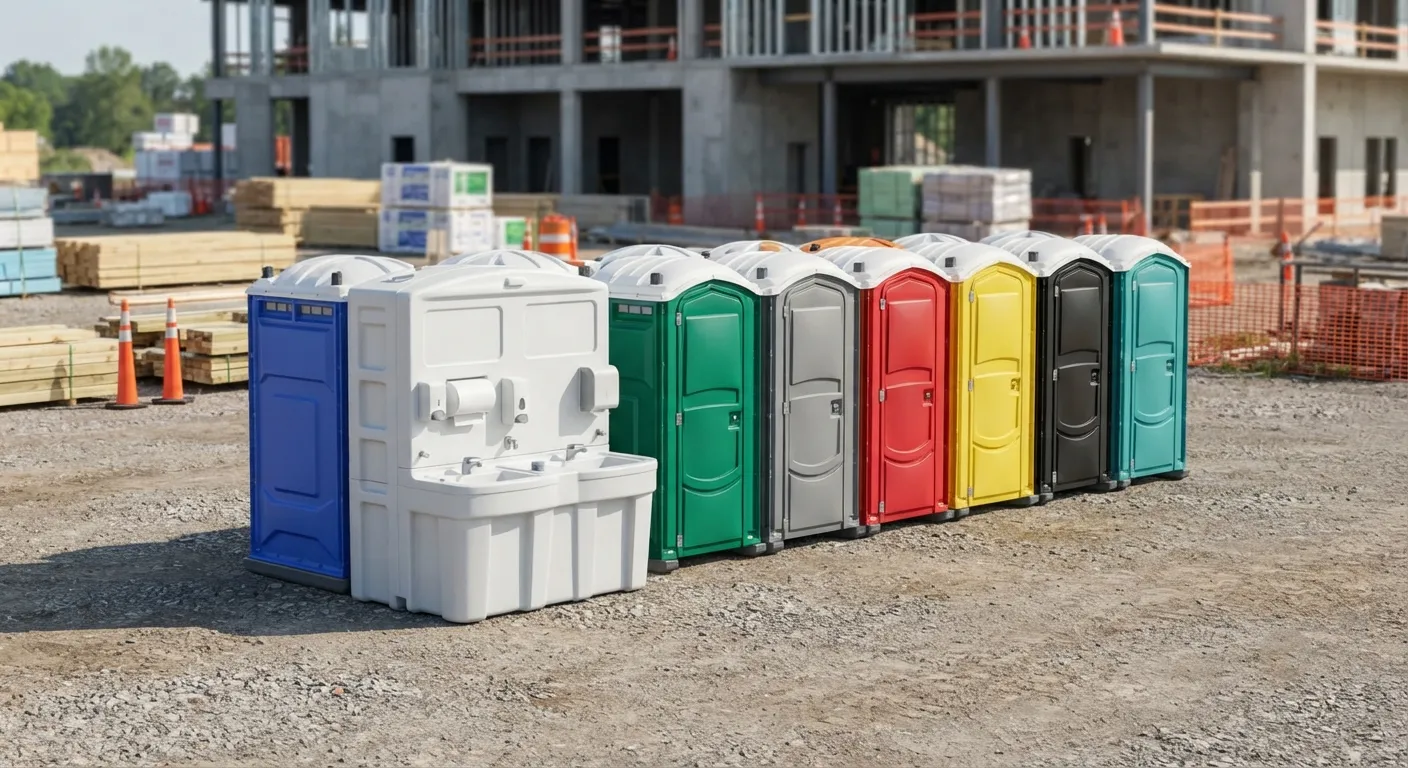
Do You Need a Service Schedule Set Up Front?
Yes, and this is the step people skip. ANSI/PSAI Z4.3, the industry baseline for portable sanitation service, calls for one visit per week for up to 10 users across a 40 hour week. A job site running two shifts or an event drawing a few hundred people needs more frequent pumping than that baseline, so say so when you book instead of finding out mid-week. Handwashing is its own line item. Under 29 CFR 1910.141(d)(2), any wash station needs soap and a way to dry hands, since hand sanitizer alone doesn't satisfy it. If your crew is applying paint, coatings, herbicides, or insecticides, OSHA 1926.51(f)(1) requires washing facilities specifically because of those contaminants. Pair a handwashing station or portable sink with every cluster of toilets rather than treating it as optional. Septic customers have their own interval to track: a typical 1,000 gallon residential tank gets pumped every 3 to 5 years depending on household size and tank size, and our pumping guide breaks down what drives that number.
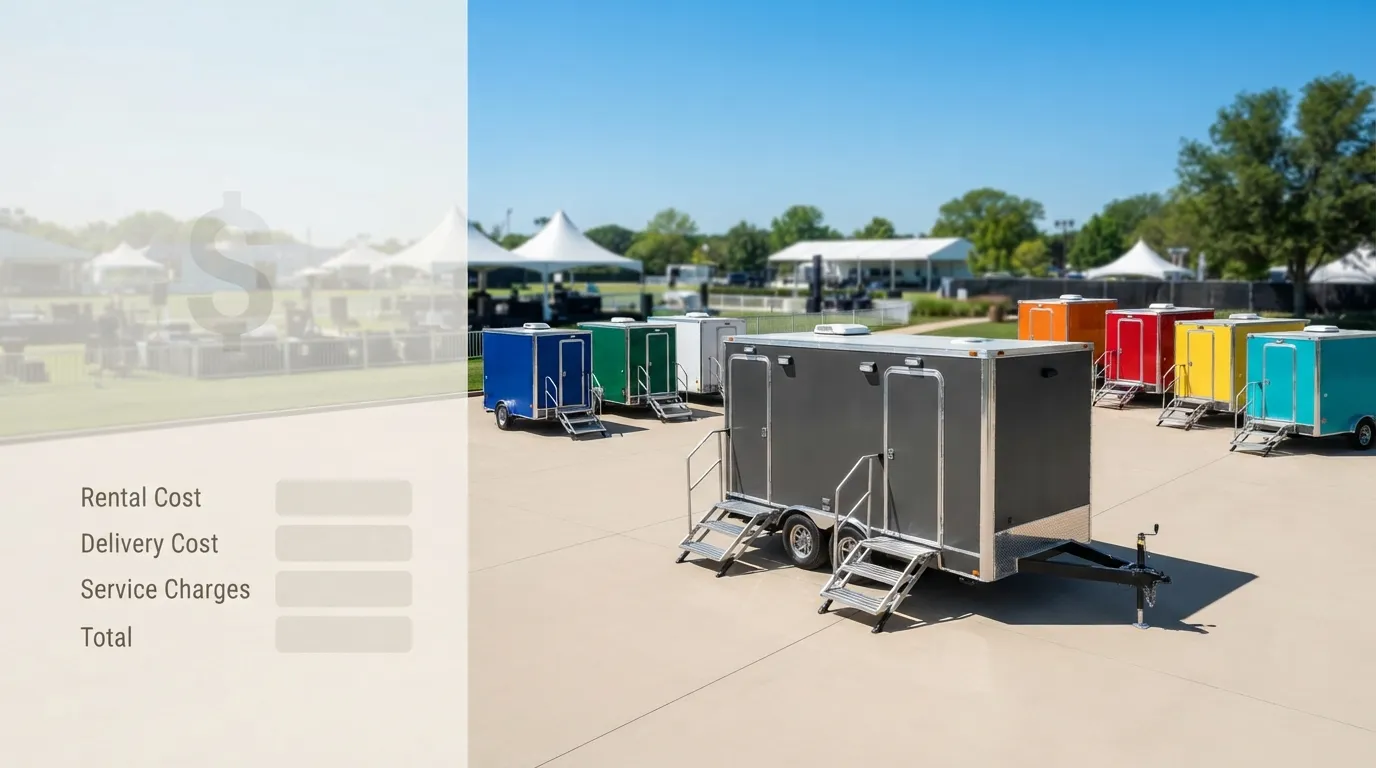
What Does a Saint George Rental Actually Cost?
Pricing depends on unit type and rental length, and longer terms cost more in total but less per day. Here's what typical bands look like across Saint George rentals:
| Unit | Day | Week | Month |
|---|---|---|---|
| Standard toilet | $100-$350 | $130-$500 | $125-$325 |
| ADA accessible | $200-$400 | $240-$400 | -- |
| Deluxe flushable | $85-$1200 | $150-$290 | -- |
| Roll-off dumpster | $51-$112 | $426-$778 | $600-$800 |
Delivery fees run separately, typically $100 to $500 for a single day and $120 to $420 for a month-long placement. A weekend rental on a standard unit typically lands around $250, useful for a two-day event without committing to a full week. For full cost breakdowns by scenario, see porta potty rental cost, per day pricing, or monthly rental rates. Storage needs follow a similar logic: a storage container runs monthly, while a temporary fence panel is priced by the day. If your job is near Washington, 7.8 miles northeast, or Santa Clara, 7.0 miles northwest, delivery logistics stay simple since both sit inside our regular Saint George service radius.
How far ahead should I book a porta potty in Saint George?
Book 5 to 7 days ahead for standard jobs, longer for weekend events near peak season. Last-minute needs still get handled through emergency porta potty rental, but advance booking guarantees the unit type and service day you actually want.
What size clearance does delivery need?
Roll-off trucks need about 60 feet of straight clearance behind the vehicle. Portable toilet delivery needs less, but flat, stable ground matters more than open space. Confirm access before the truck arrives to avoid a rescheduled delivery.
Do I need an ADA unit for a small event?
If any guest needs one, yes. ADA Standards section 213.2 requires at least one accessible unit in any cluster, regardless of total headcount, so plan for it even at a small gathering.
How often does a unit get serviced?
The industry baseline under ANSI/PSAI Z4.3 is once weekly for up to 10 users over 40 hours. Higher traffic jobs and multi-day events need more frequent visits, which our service FAQ explains in more depth.
Can I rent a handwashing station separately?
Yes. A handwashing station or portable sink can be added to any toilet order or booked alone. Soap and towels are required under 29 CFR 1910.141(d)(2), and sanitizer alone won't meet that standard.
Next step
Get a delivery date
Tell us the address, the dates and the headcount. We size the order and confirm the route.