
How Much Does Septic Tank Pumping Cost?
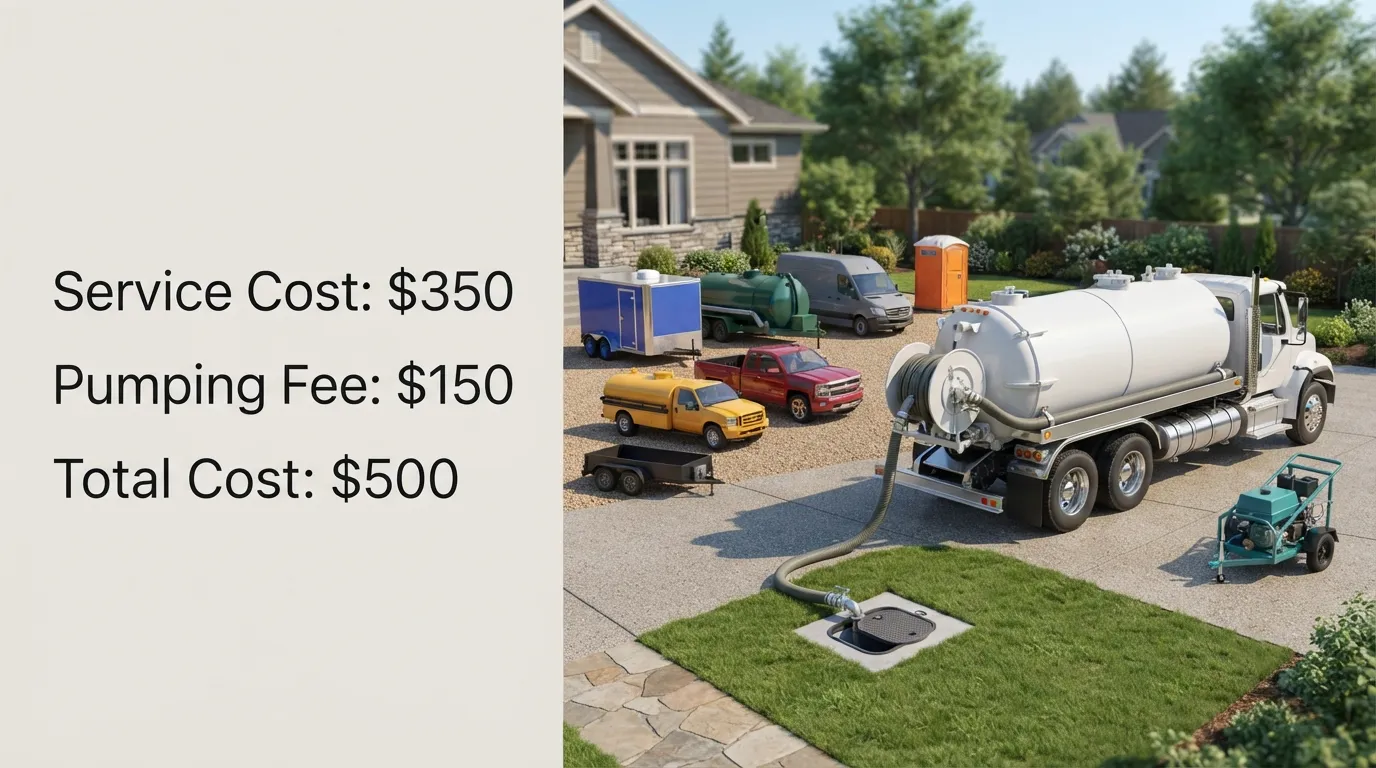
The honest answer: it depends on tank size, how long since the last pump, and how easy the tank is to reach. Most Saint George homeowners land in the 150 to 300 dollar day-rate band shown below. Weekend calls run higher, usually 50 to 150 dollars more, because crews are working outside a normal route. If your tank hasn't been touched in years, expect the higher end since solids build up and take longer to break loose. A 1,000 gallon tank is typically pumped every 3 to 5 years, driven by tank size and household size, so a family of five on a smaller tank pumps more often than a couple on a larger one. If you're not sure which bucket you fall into, our septic pumping service page walks through what a standard visit covers, and septic tank warning signs helps you figure out if you're overdue right now versus next spring. Anyone juggling a construction schedule alongside septic work should also look at construction site services for the rest of the site setup.
| service | duration | low | typical | high |
|---|---|---|---|---|
| septic pumping | day | 150 | 250 | 300 |
| septic pumping | weekend | 50 | 100 | 150 |
What Affects Septic Tank Cleaning Prices?
Access is the biggest swing factor. A tank buried under a deck or behind a locked gate costs more to service than one with a clear lid at grade, because the crew spends extra time just getting to it. Tank size matters too. A 1,000 gallon septic tank pumping cost sits differently than a 1,500 gallon system, simply because there's more to pump out. How long it's been since the last service changes things as well. A tank pumped on schedule empties clean and fast. One that's gone six or seven years past due often has hardened solids that slow the whole job down. Grease buildup plays a role for anyone running a home business or heavy kitchen use, similar to how a grease trap pumping job gets priced on commercial sites, and homes weighing a fixed monthly cost instead should compare against a monthly porta potty rental for job-site sanitation during the work. A grease interceptor gets pumped once fats, oils, grease and solids reach 25 percent of the liquid depth, and a residential tank with heavy grease intrusion can hit that same wall faster than a typical household. If you're weighing a full replacement against another few years of pumping, our guide on how often to pump a septic tank breaks down the maintenance math, and our FAQ page answers a handful of related questions we get on the phone.
How Often Should I Pump My Septic Tank?
Every 3 to 5 years is the standard window for a typical 1,000 gallon residential tank, though household size shifts that number. A bigger family generates more wastewater and fills a tank faster, so a household of six might need service closer to the 3-year mark while a couple living alone can often stretch toward 5. Waiting past that window doesn't save money. It usually costs more, because solids compact and the tank works harder before it fails outright. Saint George homes on well-established septic systems, especially ones set up decades ago before newer development pushed sewer lines further out, benefit from staying on a fixed schedule rather than waiting for a backup. If you've never had yours pumped or don't know the last date, treat it like it's overdue and get it checked. Our septic tank cleaning page covers what a routine visit includes versus an emergency call, and if you're dealing with a slow drain or bad odor right now, emergency septic service is built for exactly that. Anyone renovating a farm property with septic on site should also check farm and agricultural restrooms for interim options.
Is Septic Pumping Cheaper Than a New System?
Yes, by a wide margin. Pumping a 1,000 gallon tank on a normal 3 to 5 year cycle costs a fraction of what a septic system replacement runs, and regular pumping is what keeps a system from failing prematurely. Neglect is the expensive path. A tank that's never serviced eventually clogs its drain field, and once that happens you're looking at excavation and a full system rebuild instead of a routine pump-out. Homeowners in Saint George and nearby Washington, about 7.8 miles northeast, often assume septic issues mean total replacement, when in most cases a scheduled pump call resolves it. If you're renovating a property with septic on site and need interim sanitation while work is underway, a holding tank rental covers the gap, and our home renovation porta potty page covers job-site needs during that same project. A request a quote call gets you a real number faster than guessing from a table.
Why Does Location Change the Price?
Drive distance and access at the property both factor into the final bill. A tank in a straightforward driveway spot costs less to service than one requiring the truck to navigate a tight lot or long haul from the street. Saint George Porta Pros services the core city plus stops in Santa Clara, 7.0 miles northwest, Ivins at 10.2 miles northwest, and Hurricane out at 18.1 miles east. Dammeron Valley, the farthest of our regular stops at 17.7 miles north, sometimes sees a slightly higher rate reflecting the extra drive time. If your property sits outside the immediate Saint George core, ask when you book whether a delivery or service fee applies, since those run separately from the pump-out itself. For a broader look at which towns we cover and how far out service extends, check our service areas page, and if you're comparing septic against portable options for a temporary setup, portable toilet rental covers that alternative directly. Homes near Santa Clara or Ivins planning a larger event can also look at event restroom rental alongside their septic schedule, and anyone about us curious about how we run jobs can check our about page.
How much does septic tank pumping cost for a 1,000 gallon tank?
Typically 150 to 300 dollars for a standard day-rate visit in Saint George, with weekend service running 50 to 150 dollars on top depending on access and how overdue the tank is. Larger tanks or heavy buildup push toward the higher end of that range.
How often does a septic tank need pumping?
Every 3 to 5 years for most 1,000 gallon residential tanks, though household size shifts the number. Bigger households should lean toward the 3-year mark. Smaller households can often stretch closer to 5 without trouble.
Can I pump my septic tank myself?
No, not safely or legally in most cases. Septic waste requires proper disposal and specialized equipment. A professional pump-out also inspects the tank condition, which catches problems early before they become an septic tank warning signs emergency, and pairs well with a handwashing station rental if the job site needs both.
Does grease affect septic pumping cost?
Yes. Heavy grease buildup fills a tank faster and can require more frequent service. Homes running food-heavy operations should treat their tank more like a grease trap pumping schedule than a standard household cycle.
What happens if I skip septic pumping too long?
Solids compact, the drain field clogs, and what should have been a routine pump-out becomes a full system failure. That repair costs far more than staying on a regular 3 to 5 year schedule, which is why some homeowners pair pumping with a holding tank rental during the interim, and comparing against porta potty rental cost shows just how much cheaper prevention is.
Next step
Get a delivery date
Tell us the address, the dates and the headcount. We size the order and confirm the route.