
How many restrooms does a race course need?
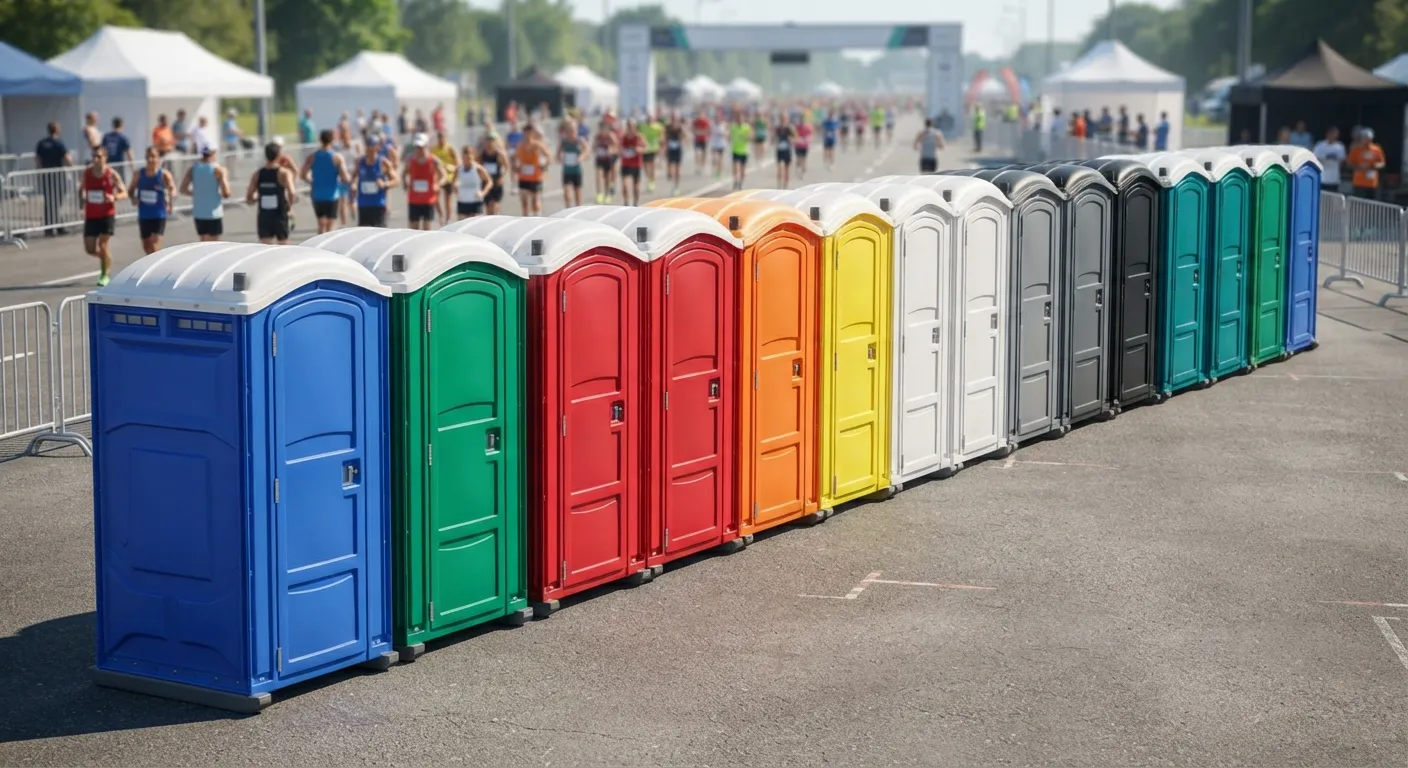
Start with the crowd, not the mile marker. How Many Porta Potties Do I Need in Saint George, UT walks through ratios, but for race day, plan restrooms at the start corral, every aid station, and the finish chute where runners linger longest. OSHA 1926.51(c) sets construction ratios (1 toilet for 20 workers or fewer, scaling up from there), and while a road race is not a jobsite, race directors around Saint George use the same math for volunteer and vendor crews working the course. Runners themselves need denser coverage, especially near the start line where lines build fast before the gun.
A typical half marathon through Saint George might place standard portable toilets at 3 to 4 points along the route, with a heavier cluster at start and finish. Add at least one ADA accessible unit per cluster; ADA Standards 213.2 requires 5 percent of clustered single-user units to be accessible, never fewer than one. For a start line serving spectators and wheelchair racers, that means checking ADA restroom requirements before finalizing your layout, not after the units arrive.
Courses that loop back near Santa Clara, 7.0 miles northwest of Saint George, or extend toward Washington, 7.8 miles northeast, often split rental orders between two delivery zones to cut drive time on setup day. If your race crosses into Washington or loops through Santa Clara, tell us the exact mile markers so we can stage units where crews can actually reach them.
Where should restrooms go on race day?
Placement follows the same logic as any large event: firm ground, close to the course, but clear of the runner lane itself. Porta Potty Placement Guide in Saint George, UT covers ground conditions in detail, and ADA Standards 302.1 requires that floor and ground surfaces be stable, firm and slip resistant, which rules out loose gravel or soft turf for accessible units. A 60 inch turning circle, per ADA Standards 304.3.1, has to fit in front of every accessible unit door, so aid stations need a flat pad, not just an open patch of shoulder.
Race organizers running events near Hurricane, 18.1 miles east of Saint George, or Ivins, 10.2 miles northwest, should flag any generator, light tower or timing tent near restroom clusters. If your course uses a temporary power pole for finish-line timing equipment or lighting, brace it properly: anchor the base plate, guy-wire the mast at two points minimum, and keep the pole clear of the restroom access path so a gust doesn't drop it across a doorway. Light Tower Rental in Saint George, UT crews on our jobs handle that bracing as part of setup, and it matters more on exposed desert courses where wind picks up fast. Knowing how to brace a temporary power pole before race morning, not during it, keeps that gear standing through gusty finish-line hours.
Delivery trucks need room too. A roll-off or restroom trailer delivery needs about 60 feet of straight clearance behind the truck, so aid stations tucked into narrow trailheads or fenced parking lots should confirm access before race morning. If your event also needs temporary fencing to keep runners on course, coordinate that layout with restroom placement so neither blocks the other.
What restroom setup works best for a Saint George marathon?
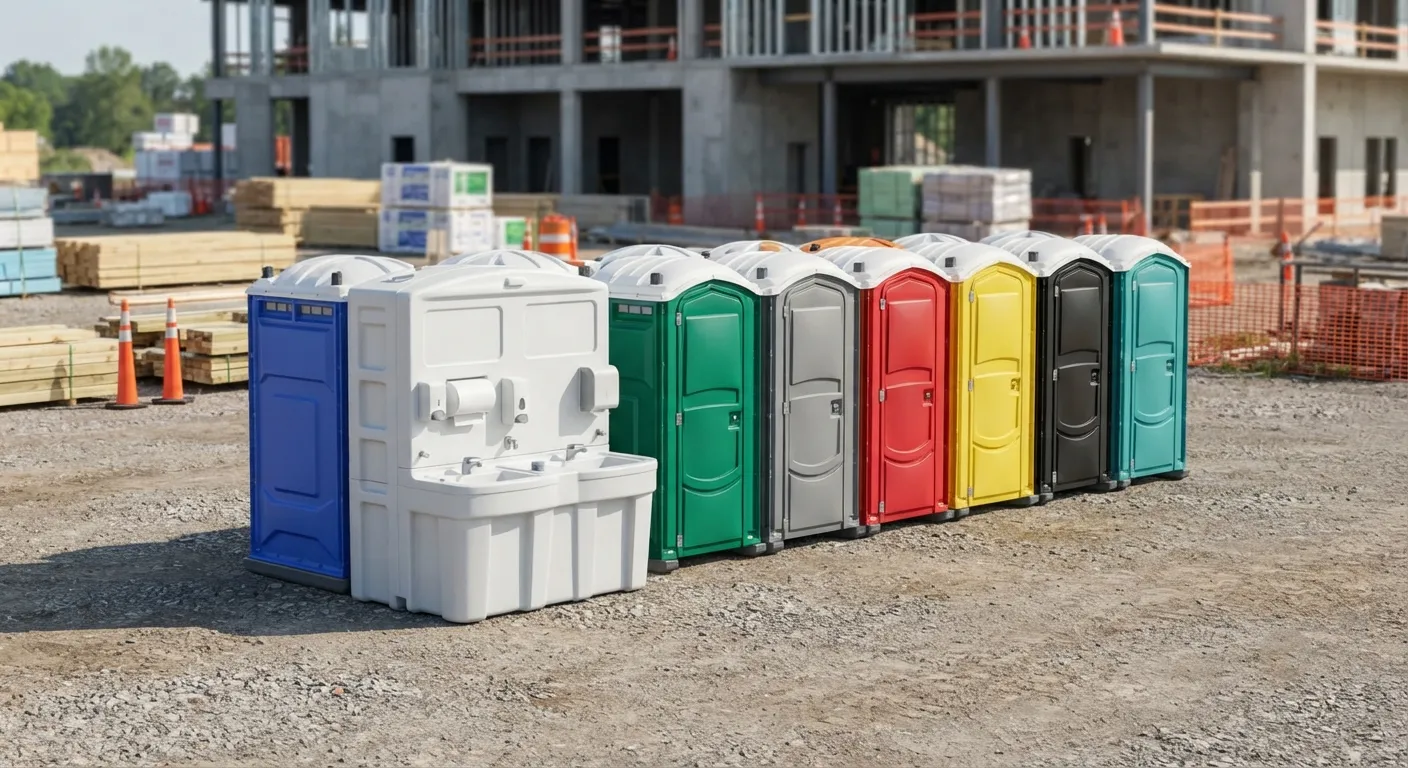
Most race directors mix unit types rather than lining up identical units. Standard porta potty rental covers the bulk of aid stations, a restroom trailer rental handles VIP or sponsor areas near the finish, and handwashing station rental covers food and hydration tables. 29 CFR 1910.141(d)(2) requires washing facilities stocked with soap and towels, not hand sanitizer alone, which matters if your event serves food near the finish line.
For a finish festival with vendors, a 4 stall restroom trailer or 8 stall restroom trailer moves crowds faster than a bank of single units. Trailer rentals for a single event day run from $200 to $800 depending on stall count and finish quality, per our measured pricing.
| Setup | Best for | Typical range |
|---|---|---|
| Standard units | Aid stations, course points | $130 to $500 per week |
| ADA units | Start/finish, spectator zones | $120 to $240 per week |
| Restroom trailer | Finish festival, VIP | $200 to $800 per event day |
| Handwashing stations | Food and aid tables | Ask for event quote |
Book early. Emergency Porta Potty Rental in Saint George, UT exists for a reason, but race weekends fill our fleet fast, and a last-minute add on Saturday morning is harder to fill than a request submitted weeks out. Compare notes with Concert Restroom Rental in Saint George, UT or Festival Restroom Rental in Saint George, UT if your race weekend includes an expo or concert component, since combined events often need restrooms staged for two different crowd patterns on the same footprint.
How far in advance should I book race restrooms?
Book 4 to 6 weeks out for a full marathon course, sooner if your date overlaps another Saint George event. Fleet availability tightens fast on popular race weekends. Request a Quote with your course map and we will lock units before they're gone.
Do we need ADA units at every aid station?
Not necessarily every station, but yes at the start, finish and any spectator viewing area. ADA Standards 213.2 requires at least one accessible unit per cluster. See ADA Accessible Porta Potty in Saint George, UT for specs.
Can restrooms be moved along the course after setup?
Units can be relocated before race day, but not safely once runners are on course. Confirm mile-marker placement during planning using our placement guide, then treat that layout as final.
What if the race extends into another town?
Tell us the full route. Courses stretching toward Hurricane or Ivins may need split delivery runs, and we plan drive time around those distances in advance.
How much does a full marathon restroom package cost?
Costs vary by unit mix and course length; a week-long rental of standard units runs $130 to $500, while event-day trailers run $200 to $800. See Porta Potty Rental Cost in Saint George, UT for full pricing detail.
Next step
Get a delivery date
Tell us the address, the dates and the headcount. We size the order and confirm the route.