
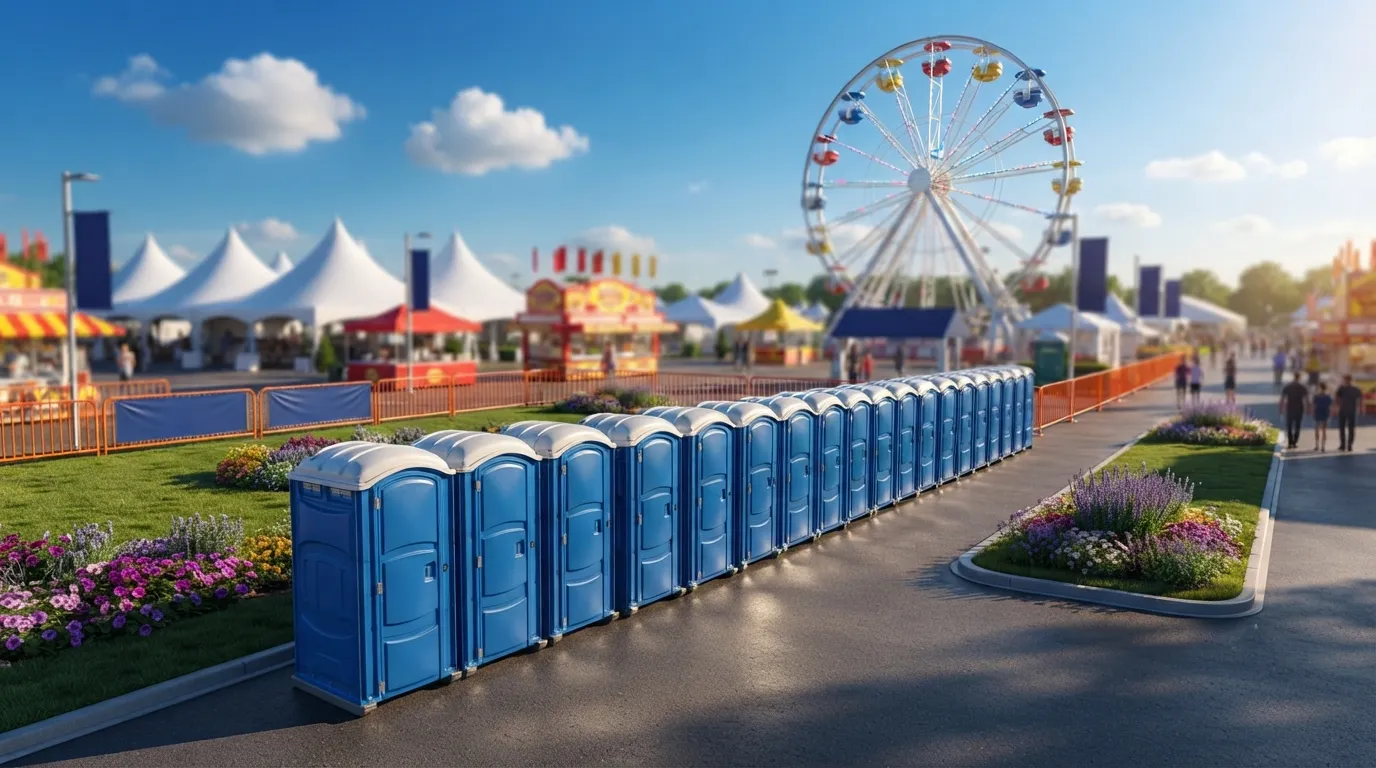
How many restrooms does a county fair need?
Start with attendance, then split it by zone. A fairground with a midway, a grandstand and a vendor row behaves like three separate events stacked together, and each needs its own restroom cluster so lines do not back into walkways. How Many Porta Potties Do I Need walks through the math in more detail, but the short version: one standard porta potty rental per 200 attendees is the baseline, and fairs with beer gardens or long grandstand hours often need to run tighter than that. OSHA 1926.51(c) sets its own ratio for construction crews, one toilet per 20 workers, and that number is worth knowing if fair setup and teardown crews are on-site for multiple days building stages and barns.
Under ADA Standards section 213.2, any cluster of single-user units needs at least one accessible unit, never fewer than one no matter how small the cluster. An ADA accessible porta potty needs a 60 inch turning circle per ADA Standards section 304.3.1 and a clear route at least 36 inches wide per section 403.5.1, so placement near gravel lots or livestock barns has to leave that path open. For fairs with a grandstand and separate 4-H barns, we usually recommend spreading units across both zones rather than clustering everyone at the main gate, and a porta potty placement guide covers ground surface and slope in more depth.
What restroom options work best for a multi-day fair?
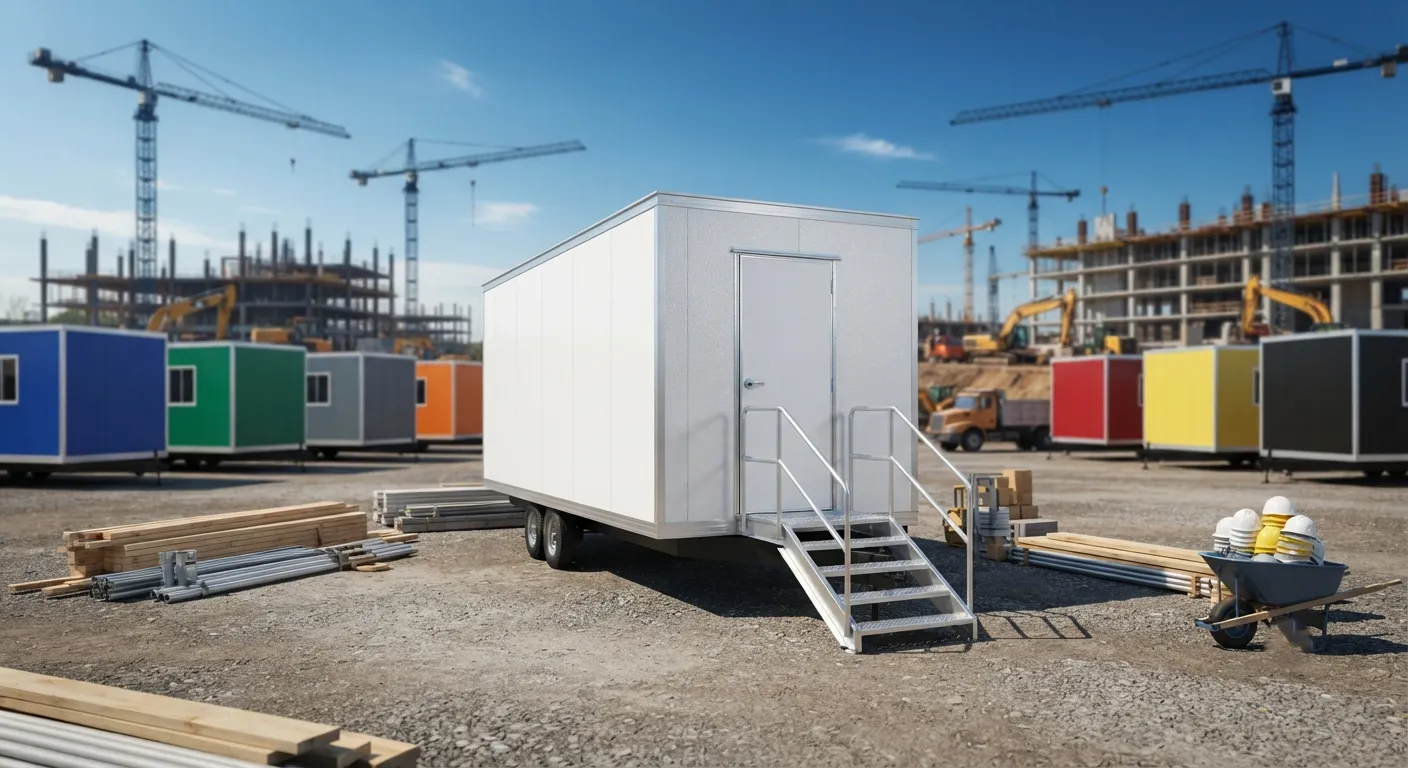
Multi-day fairs get hard use, and a mix of unit types holds up better than one type spread thin. Standard units handle the midway and vendor rows. A restroom trailer rental works well near the grandstand or main stage, where fair boards want something closer to a real bathroom. An 8 stall restroom trailer can absorb grandstand intermission crowds without a line spilling onto the concourse, and a 4 stall restroom trailer fits smaller satellite areas like the 4-H barns or a secondary parking lot.
| unit | day | week | event |
|---|---|---|---|
| standard | $100-$350 | $130-$500 | $200-$800 |
| ada | $200-$400 | $240-$400 | - |
| trailer | $175-$2,500 | $1,397-$1,650 | $2,499-$3,899 |
Handwashing matters as much as toilet count. Under 29 CFR 1910.141(d)2, washing facilities need soap and a towel or drying device, and hand sanitizer alone does not satisfy that. A handwashing station rental near food vendor rows covers that, and if the fair runs livestock judging or a petting zoo, extra units near animal areas cut down on cross-contamination. A deluxe flushable porta potty is worth the upgrade near a beer garden or VIP grandstand section, since flush units handle heavier multi-day traffic better than standard tanks. Every unit on the lot carries a 60 to 70 gallon holding tank, and ANSI/PSAI Z4.3 sets one service visit per week for up to 10 users over 40 hours as the baseline interval, so a four-day fair with heavy traffic usually needs a mid-run service rather than waiting until teardown.
Why does fair layout affect restroom placement in Saint George?
Ground conditions and crowd flow decide where units can actually sit, not just where the fair board wants them. Saint George fairground lots often mix packed gravel with grass overflow areas, and ADA Standards section 302.1 requires a stable, firm, slip-resistant surface for accessible routes, so we check ground before we drop ADA units. A porta john rental near a dirt access road needs a level pad, not a slope, and ramp sections built for wheelchair access can't exceed a 1:12 slope under ADA Standards section 405.2.
Delivery trucks also need room to maneuver between barns, stages and parked vendor trailers, and a roll-off truck needs about 60 feet of straight clearance behind it to place a dumpster, which matters if the fair runs a roll-off dumpster rental alongside restrooms for vendor waste. Fair boards near Washington, 7.8 miles northeast, and Hurricane, 18.1 miles east, sometimes share fairground equipment across events, and driving distance affects delivery scheduling more than most boards expect. We also run temporary fence rental around restroom clusters and generator areas when a fair wants clear crowd lanes, and a light tower rental keeps night restroom paths lit for evening concerts or fireworks. For questions on how the county handles staging permits, see porta potty permit requirements or check with the city directly, since placement rules in public right of way areas still need confirming with Saint George.
How far in advance should we book fair restrooms?
Book as soon as fair dates are set, ideally two to three months out. Multi-day fairs pull from the same trailer and standard unit inventory as weddings and festivals across Saint George, and trailers book out fastest. A request a quote early locks in count and delivery timing before the schedule fills.
Do fairgrounds need separate handwashing stations from restrooms?
Yes, especially near food vendors and livestock areas. Restroom units include some handwashing built in, but vendor rows and animal barns need standalone stations. 29 CFR 1910.141(d)(2) requires soap and towels or a drying device, not sanitizer alone.
Can we add restrooms mid-event if crowds run heavier than expected?
Yes, most fairs build in a contingency call for day two or three. We stage extra standard units on standby and can drop them same-day if grandstand or midway lines run long. Flag this when booking so trucks are routed nearby.
What is the difference between a standard unit and a restroom trailer for a fair?
A standard unit is a self-contained booth with a 60 to 70 gallon tank, about 44 by 48 inches on the ground. A restroom trailer rental has multiple stalls, sinks and flush toilets inside a climate-controlled trailer, better suited to grandstand crowds over several days.
Do we need ADA units even for a small county fair?
Yes. ADA Standards section 213.2 requires at least one accessible unit in any cluster, regardless of cluster size. A small fair with even two or three standard units still needs one ADA unit nearby.
Next step
Get a delivery date
Tell us the address, the dates and the headcount. We size the order and confirm the route.